

Introduction
In a world where efficiency is paramount, Robotic Process Automation (RPA) stands out as a game-changing technology that promises to revolutionize the way organizations operate. By deploying software bots to handle repetitive tasks, RPA not only reduces the burden on human employees but also enhances accuracy and accelerates processing times. As businesses navigate the complexities of modern operations, RPA offers a clear path toward improved productivity and cost savings.
With a growing number of companies recognizing its potential—evidenced by significant budget allocations for automation—this article delves into the transformative power of RPA, exploring its benefits, implementation challenges, and future trends that will shape the landscape of business automation. Embracing RPA is not merely about replacing manual efforts; it is about unlocking the potential of human talent to focus on strategic, innovative initiatives that drive success.
Understanding Robotic Process Automation (RPA): A Comprehensive Overview
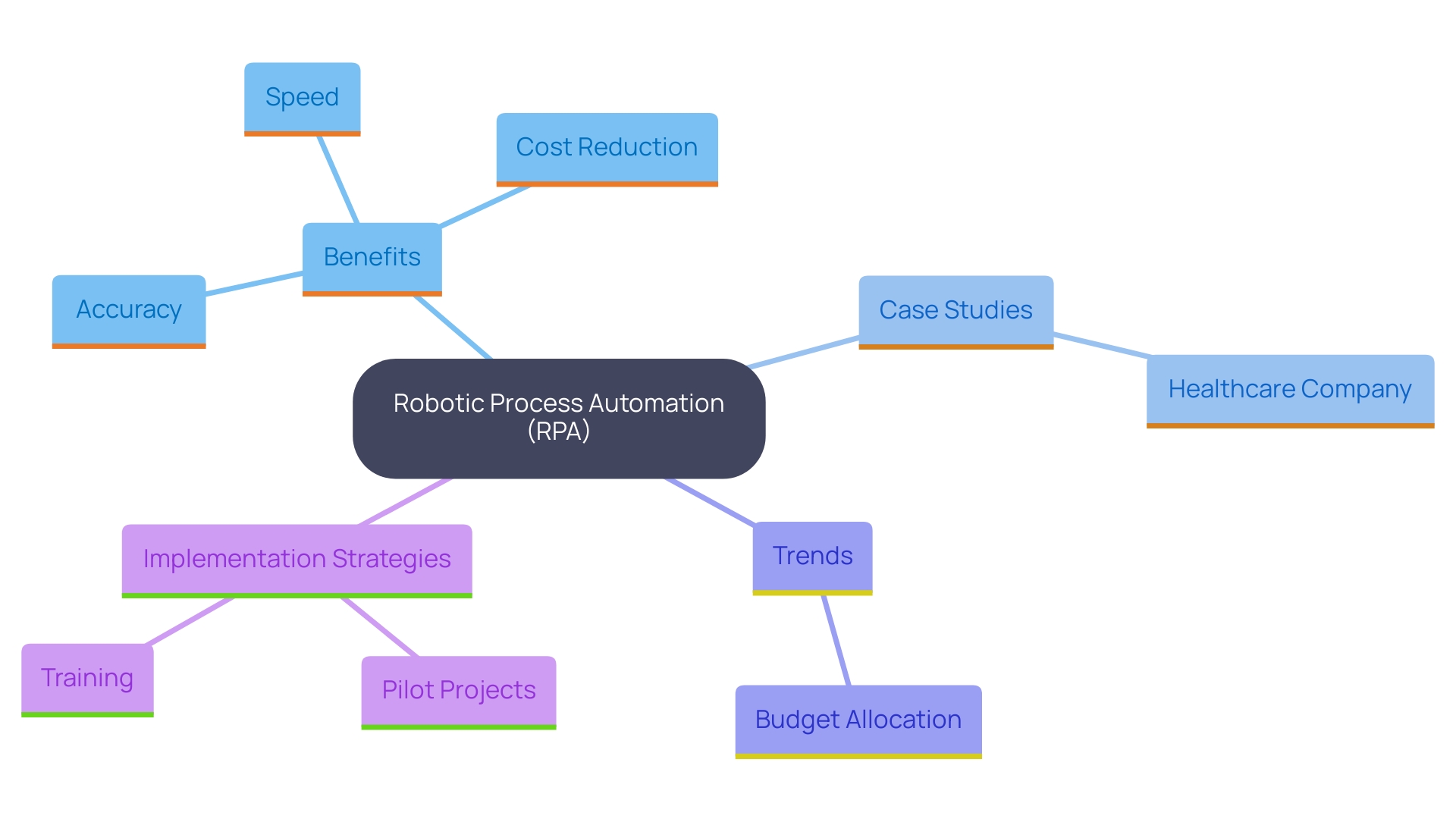
Robotic Process Automation (RPA) embodies a transformative technology that utilizes software robots, or ‘bots’, to automate repetitive and rules-based tasks traditionally managed by human employees. As Directors of Operations Efficiency grapple with the challenges of enhancing productivity while managing costs, RPA emerges as a powerful solution aimed at improving efficiency by mimicking human actions across digital platforms, facilitating a seamless workflow. RPA is especially beneficial in data-driven environments, where it fosters higher accuracy, significant reductions in costs, and accelerated processing times.
A striking case study illustrates this impact: a mid-sized healthcare company improved efficiency by mechanizing data entry, software testing, and legacy system integration using GUI technology. They faced challenges such as manual data entry errors and slow software testing, but by implementing solutions like EMMA RPA and Microsoft Power Automate, they achieved:
- A 70% reduction in data entry errors
- A 50% acceleration in testing processes
Overall, workflow efficiency improved by 80%, with ROI realized within just six months. This success highlights the effectiveness of RPA solutions in improving efficiency and employee morale.
As organizations increasingly adopt RPA, a notable trend emerges: nearly 48% of companies are earmarking between 10% and 20% of their total annual budgets for document and process automation over the next 18 months. This shift underscores the system’s increasing significance in the pursuit of efficiency and innovation. However, as emphasized in recent studies, customers require continuous support from vendors throughout the adoption journey, not just at the initial point of purchase.
By embracing RPA, businesses can effectively eliminate mundane tasks, liberating human talent to concentrate on strategic initiatives that demand critical thinking and creativity. According to Augustin Gohil, President of SalesCatcher, ‘RPA not only streamlines operations but also empowers teams to focus on innovation and growth.’ This example not only highlights RPA’s potential but also serves as a testament to its role in redefining efficiency across various industries.
To effectively execute RPA, organizations should think about beginning with a pilot project, evaluating the specific processes that can gain from mechanization, and ensuring strong training and support for their teams to maximize the system’s impact.
The Role of RPA in Streamlining Business Processes and Enhancing Efficiency
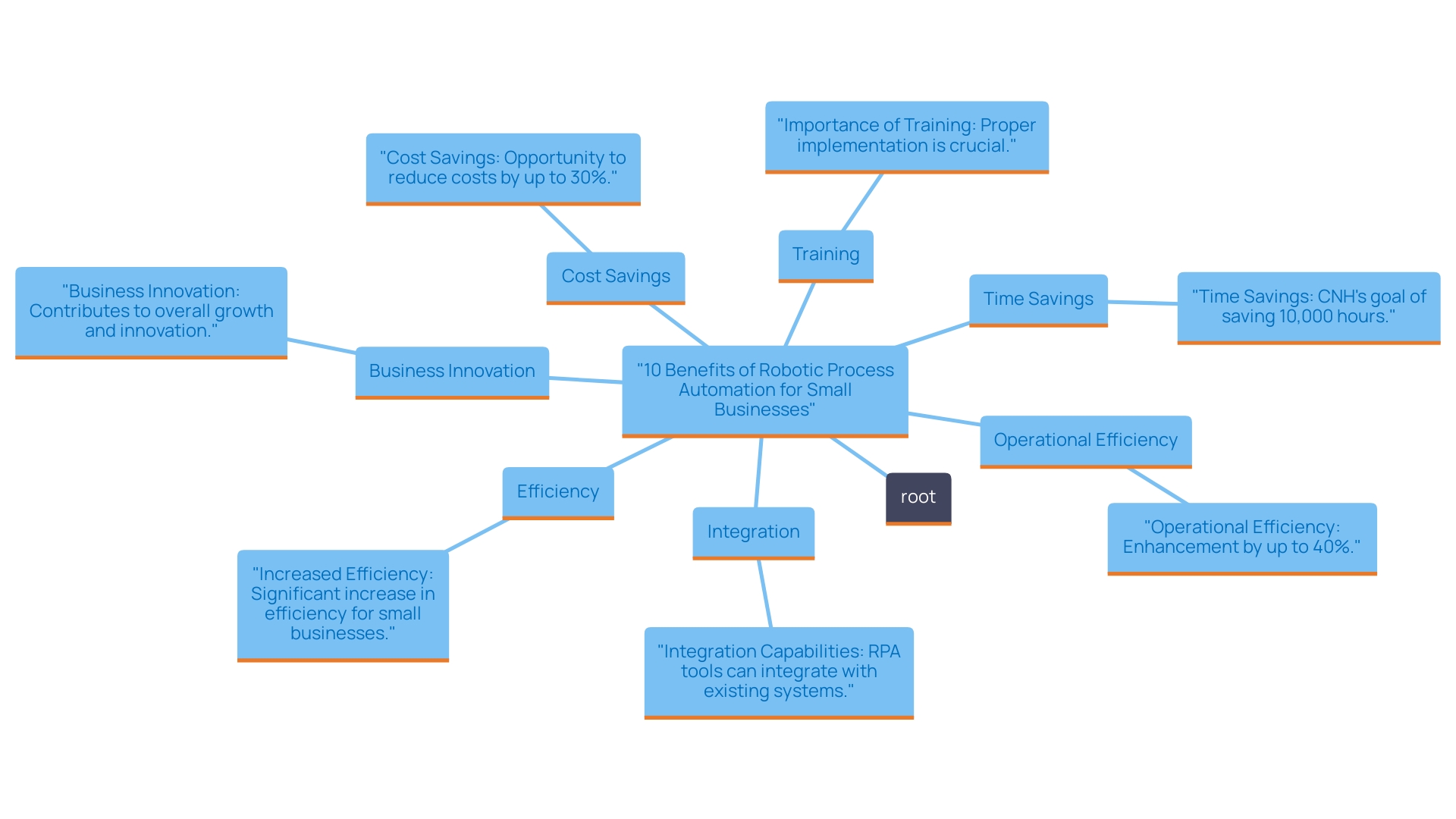
RPA is an essential catalyst for streamlining business processes, automating tasks such as data entry, invoice processing, and customer service inquiries. Organizations that have embraced RPA technology report remarkable reductions in processing times and expenses. For example, companies utilizing RPA have observed cost savings of up to 30%, highlighting the substantial financial advantages of smart processes. Additionally, CNH aims to save 10,000 hours by leveraging GitHub Copilot, an AI-driven coding tool that assists developers by suggesting code snippets, further exemplifying the time savings achievable through RPA.
By automating repetitive tasks, RPA not only mitigates the risk of human error but also accelerates task execution, ultimately enhancing customer satisfaction. As Ryan Kane, owner of the IT managed services provider Soaring Towers, aptly puts it,
- “They need to be shown how to really use the tool in order to use it effectively. A chisel in the hands of a trained professional can create amazing things; a chisel in the hands of an amateur can be a lost opportunity.”
This perspective underscores the importance of proper implementation and training in maximizing RPA potential.
Moreover, RPA tools can seamlessly integrate with existing systems without necessitating major changes to the underlying infrastructure, making it a cost-effective solution for organizations striving to boost efficiency. This allows businesses to reallocate resources more strategically, redirecting focus toward innovation and driving growth, thereby gaining a competitive edge in their industries. The incremental approach to AI implementation suggests that companies prioritizing projects based on their business needs are more likely to succeed. This reinforces the notion that RPA is not just about automation but also about augmenting human capabilities and enhancing outcomes. Moreover, further case studies suggest that organizations implementing RPA with a clear strategy have realized up to 40% enhancement in operational efficiency, emphasizing the transformative potential of this innovation.
Challenges in Implementing RPA Solutions
Implementing Robotic Process Automation (RPA) solutions can offer significant advantages, but it also presents several challenges that organizations must navigate. One significant obstacle is employee resistance, often based on fears of job displacement or unwillingness to adopt new advancements. Recent statistics indicate that roughly 40% of employees voice concerns regarding mechanization, emphasizing the need for proactive engagement.
To address this resistance, leaders should:
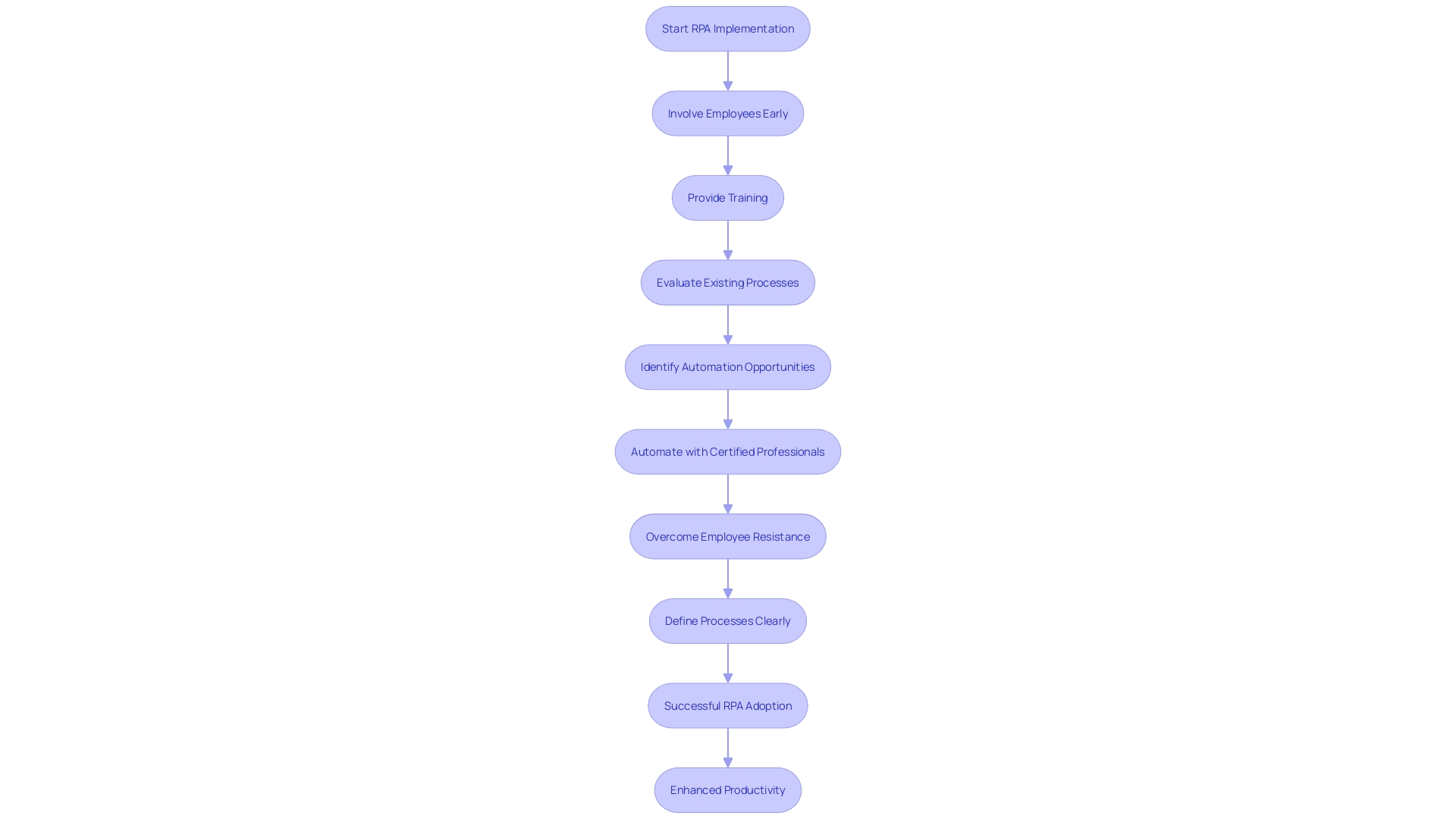
- Involve employees early in the RPA journey, ensuring they feel supported and informed.
- Provide comprehensive training.
- Foster a culture of innovation to facilitate a smoother transition.
As one expert insightfully notes, ‘Making the technology more personal leads to accelerated adoption, buy-in, and change.’
Additionally, organizations must focus on the clarity of their processes. Poorly defined processes can hinder effective RPA implementations, resulting in suboptimal outcomes. Conducting a thorough evaluation of existing processes before mechanization is essential. This aligns with our risk-free, ROI-driven methodology, where we:
- Assess your processes.
- Calculate effort.
- Estimate time savings.
- Automate through certified professionals.
By pinpointing areas where RPA can deliver maximum value, organizations can enhance productivity and overall efficiency. Our GUI testing case studies demonstrate how mid-sized companies have successfully reduced data entry errors by 70% and accelerated testing processes by 50%, achieving ROI within six months.
By proactively addressing these challenges, organizations can leverage RPA as a powerful tool for driving operational excellence, rather than viewing it merely as a replacement for human workers. Ultimately, embracing RPA not only streamlines operations but also empowers teams to focus on more strategic, value-adding initiatives.
Future Trends in RPA and Business Automation
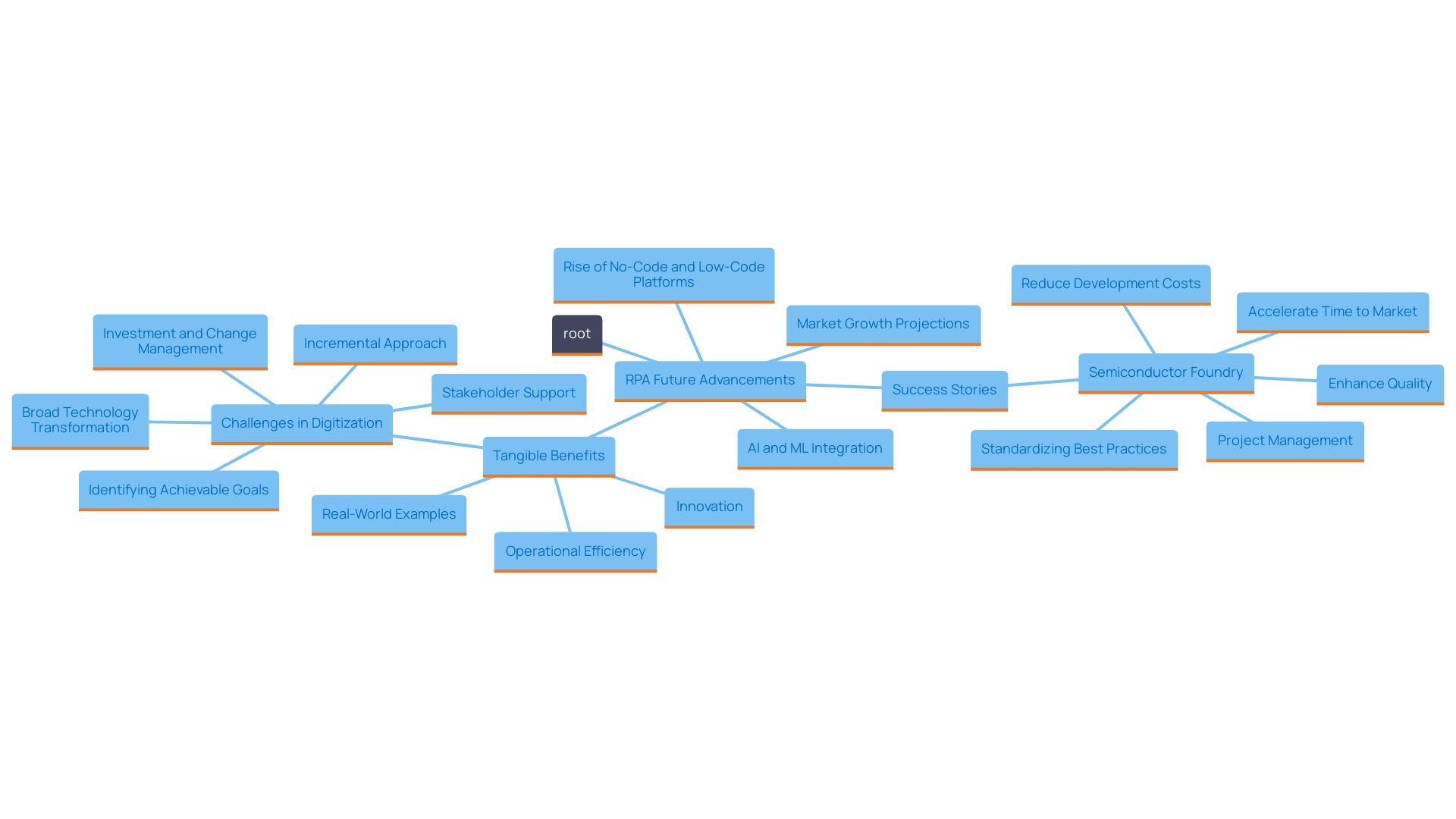
The future of Robotic Process Automation (RPA) is poised for transformative advancements that will significantly impact business operations strategies. A key trend emerging is the seamless integration of RPA with artificial intelligence (AI) and machine learning (ML). This powerful combination enables bots not only to carry out routine tasks but also to make intelligent decisions, effectively addressing complex challenges that require cognitive capabilities. By leveraging RPA, organizations can enhance operational efficiency, reduce manual workloads, and free up valuable resources for more strategic initiatives.
Furthermore, the RPA market is expected to attain $50.50 billion worldwide by 2030, emphasizing the increasing significance of intelligent processes in business strategies. The rise of no-code and low-code platforms is democratizing automation, enabling non-technical users to develop and manage RPA solutions without extensive programming knowledge. This trend empowers teams across various departments to actively participate in digital transformation initiatives, fostering a culture of innovation and agility essential for overcoming implementation challenges.
Organizations that proactively embrace these advancements position themselves for a competitive edge. For instance, the Nividous platform successfully automated claims processing for an eyecare practice, saving skilled staff over 37,000 hours annually and reducing the claim-to-cash cycle by nine days. This example illustrates the tangible benefits of RPA, addressing common reluctance to adopt AI due to perceived complexities and costs. As companies utilize these innovations, they enhance operational processes while fostering an environment that emphasizes continuous improvement and adaptability—essential for succeeding in a rapidly changing business landscape. Furthermore, as RPA technology continues to evolve, we can anticipate future trends that will integrate AI capabilities even further, leading to greater efficiencies and innovations in automation.
Conclusion
Embracing Robotic Process Automation (RPA) represents a pivotal shift in how organizations approach efficiency and productivity. By automating repetitive, rules-based tasks, RPA not only alleviates the burden on human employees but also significantly enhances accuracy and processing speeds. Real-world examples, such as the healthcare company’s impressive improvements in operational efficiency, highlight the tangible benefits that RPA can deliver.
Organizations that invest in RPA are likely to see reductions in operational costs, increased ROI, and a more engaged workforce.
However, the journey to successful RPA implementation is not without its challenges. Addressing employee concerns, refining existing processes, and ensuring comprehensive training are vital steps that can facilitate a smoother transition. As companies navigate these hurdles, it is essential to view RPA as a means to augment human capabilities rather than merely a tool for replacing jobs.
By fostering a culture of innovation, organizations can empower their teams to focus on strategic initiatives that drive growth and improve overall performance.
Looking ahead, the integration of RPA with artificial intelligence and machine learning will define the future of business automation. This synergy will unlock new potentials, enabling organizations to tackle complex challenges and streamline operations further. As the market for RPA continues to expand, those who proactively adopt these technologies will find themselves at a competitive advantage, ready to thrive in an evolving landscape.
By committing to this transformative journey, businesses can not only enhance their operational efficiency but also cultivate a resilient, innovative environment that prioritizes continuous improvement.
Frequently Asked Questions
What is Robotic Process Automation (RPA)?
RPA is a transformative technology that uses software robots, or ‘bots’, to automate repetitive and rules-based tasks that are traditionally performed by human employees, improving efficiency and productivity.
How does RPA improve operational efficiency?
RPA mimics human actions across digital platforms, leading to higher accuracy, significant cost reductions, and faster processing times, particularly in data-driven environments.
Can you provide an example of RPA’s effectiveness?
A mid-sized healthcare company mechanized data entry and software testing using RPA, resulting in a 70% reduction in data entry errors, a 50% acceleration in testing processes, and an overall workflow efficiency improvement of 80%, achieving ROI within six months.
What trends are emerging in RPA adoption among companies?
Nearly 48% of companies are planning to allocate 10% to 20% of their total annual budgets for document and process automation over the next 18 months, indicating a growing emphasis on RPA for efficiency and innovation.
What are some benefits of implementing RPA?
Implementing RPA can lead to cost savings of up to 30%, reduced human error, accelerated task execution, and enhanced customer satisfaction by allowing employees to focus on strategic initiatives rather than mundane tasks.
What challenges might organizations face when implementing RPA?
Organizations may encounter employee resistance due to fears of job displacement, poorly defined processes, and the need for comprehensive training and support during the transition to RPA.
How can organizations address employee resistance to RPA?
Leaders should involve employees early in the RPA journey, provide thorough training, and foster a culture of innovation to ensure a smoother transition and greater acceptance of the technology.
What is the future outlook for RPA?
The RPA market is expected to reach $50.50 billion by 2030, with advancements in AI and machine learning enabling bots to perform more complex tasks and making automation accessible to non-technical users through no-code and low-code platforms.
How does RPA integrate with other technologies?
RPA is increasingly being integrated with artificial intelligence (AI) and machine learning (ML), allowing bots to not only automate routine tasks but also make intelligent decisions, enhancing operational efficiency and resource allocation.
What should organizations consider when starting with RPA?
Organizations are advised to begin with a pilot project, evaluate processes that can benefit from automation, and ensure strong training and support for teams to maximize the impact of RPA.
List of Sources
- Understanding Robotic Process Automation (RPA): A Comprehensive Overview
- kissflow.com (https://kissflow.com/workflow/workflow-automation-statistics-trends/)
- sciencedirect.com (https://www.sciencedirect.com/science/article/pii/S1478409221000522)
- techtarget.com (https://www.techtarget.com/searchcio/definition/RPA)
- rapidautomation.ai (https://rapidautomation.ai/)
- keypointintelligence.com (https://keypointintelligence.com/keypoint-blogs/a-look-at-keypoint-intelligence-s-study-on-robotic-process-automation)
- codingcrafts.io (https://codingcrafts.io/blog/how-does-robotic-process-automation-rpa-differ-from-intelligent-automation-ia)
- The Role of RPA in Streamlining Business Processes and Enhancing Efficiency
- cflowapps.com (https://www.cflowapps.com/workflow-automation-statistics/)
- electroneek.com (https://electroneek.com/blog/how-to-calculate-roi-in-rpa-projects-economics-of-business-automation/)
- cio.com (https://www.cio.com/article/2112589/wheres-the-roi-for-ai-cios-struggle-to-find-it.html)
- hbr.org (https://hbr.org/2018/01/artificial-intelligence-for-the-real-world)
- datafloq.com (https://datafloq.com/read/benefits-of-robotic-process-automation-for-small-businesses?feed_id=1410&_unique_id=657b00f4a0134)
- codingcrafts.io (https://codingcrafts.io/blog/how-does-robotic-process-automation-rpa-differ-from-intelligent-automation-ia)
- Challenges in Implementing RPA Solutions
- kissflow.com (https://kissflow.com/workflow/workflow-automation-statistics-trends/)
- community.openai.com (https://community.openai.com/t/solved-whats-wrong-with-the-api-request-syntax/36611)
- stackoverflow.com (https://stackoverflow.com/questions/28084206/incorrect-syntax-near-unclosed-quotation-mark-after-the-character-string)
- automationreadypanels.com (https://www.automationreadypanels.com/automation-and-systems/intelligent-automation-leveraging-to-unlock-efficiency-growth/)
- antomc99.medium.com (https://antomc99.medium.com/the-business-value-of-robotic-process-automation-a4e72cc65f17)
- signavio.com (https://www.signavio.com/post/robotic-process-automation/)
- codingcrafts.io (https://codingcrafts.io/blog/how-does-robotic-process-automation-rpa-differ-from-intelligent-automation-ia)
- rsa.com (https://rsa.com/products/governance-lifecycle)
- Future Trends in RPA and Business Automation
- zaptest.com (https://www.zaptest.com/the-impact-of-ai-in-robotic-process-automation-a-comprehensive-discussion-on-the-convergence-of-ai-rpa)
- appian.com (https://appian.com/blog/acp/insurance/generative-ai-for-insurance)
- ibm.com (https://www.ibm.com/watsonx/resources/client-quotes)
- nividous.com (https://nividous.com/blogs/rpa-case-study)
- accenture.com (https://www.accenture.com/us-en/services/intelligent-automation-index)
- bain.com (https://bain.com/insights/better-faster-cheaper-how-digital-transforms-r-and-d)