

Introduction
In an industry where speed and efficiency are paramount, the role of automation in telecommunications has emerged as a game-changer. As organizations grapple with the complexities of modern networks and the demands of an increasingly digital landscape, embracing automation is no longer optional—it’s essential. From reducing manual errors to accelerating service provisioning, automation technologies like Robotic Process Automation (RPA) and advanced AI solutions are transforming operations, enabling telecom companies to respond swiftly to market needs and enhance customer satisfaction.
With projections indicating a significant rise in automation adoption, the time is ripe for businesses to harness these tools, streamline processes, and unlock new levels of operational efficiency. This article delves into the transformative power of automation in telecommunications, exploring its benefits, challenges, and future trends that will shape the industry’s landscape.
Defining Automation in Telecommunications
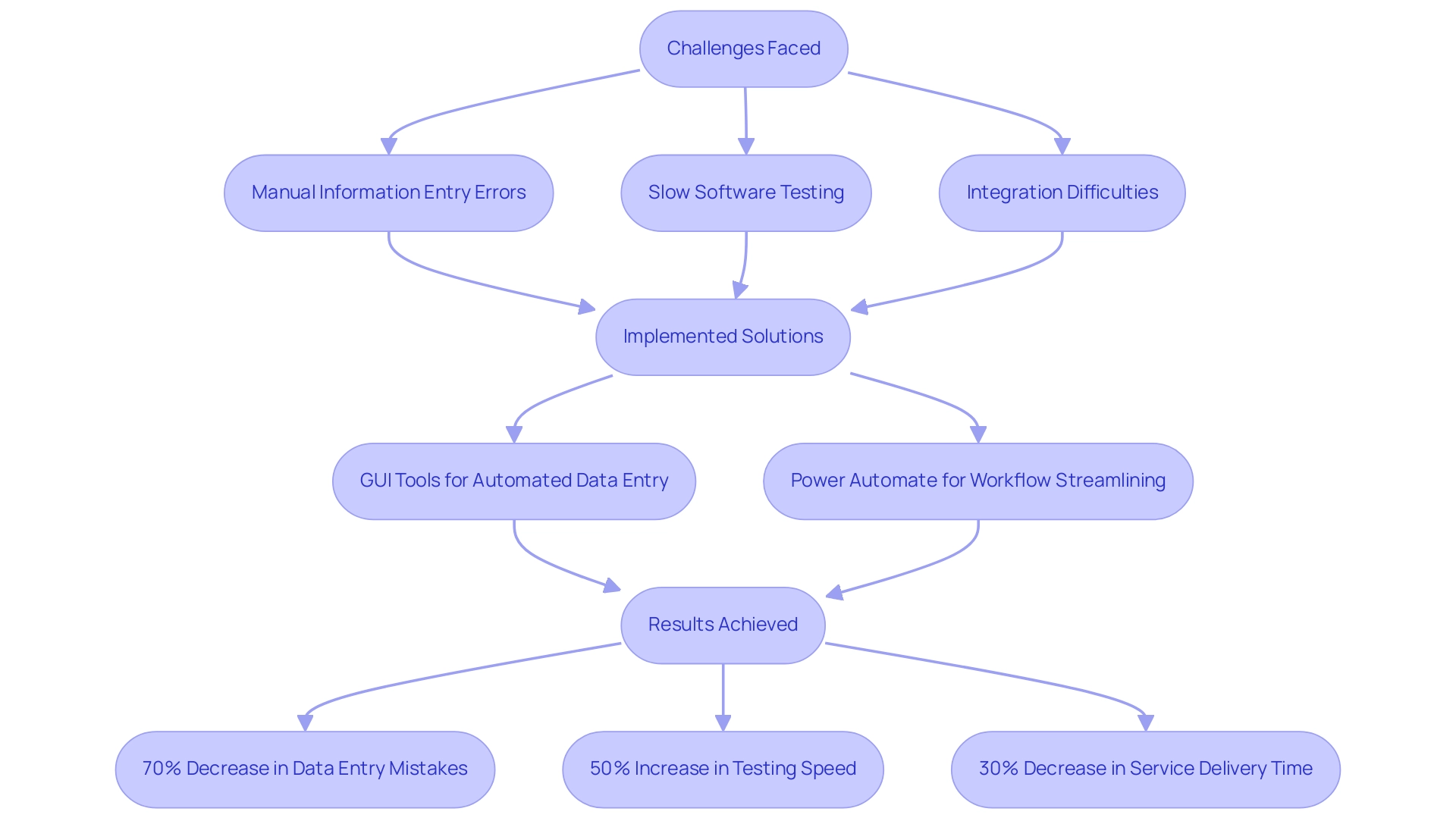
Automation in telecommunications embodies the strategic use of technology to carry out tasks that once demanded human intervention, ranging from network configuration and fault management to service provisioning. A notable case study involving a mid-sized company demonstrated that they faced significant challenges, including:
- Manual information entry errors
- Slow software testing
- Difficulty integrating outdated systems without APIs
By utilizing GUI tools, they enhanced operational efficiency through automated data entry and software testing, leading to a significant 70% decrease in data entry mistakes and a 50% increase in testing speed. With projections indicating that over 70% of telecommunications companies will implement some form of mechanization by 2024, this shift is crucial for enhancing service delivery and responding swiftly to market demands.
Industry expert Jane Doe emphasizes, ‘Automation is no longer a luxury but a necessity for telecom companies aiming to stay competitive in an ever-evolving landscape.’ The emergence of technologies such as EMMA RPA and Microsoft Power Automate has further transformed operations, facilitating user-friendly digitalization and smooth business process management.
EMMA RPA specifically addresses the challenge of manual data entry by automating repetitive tasks, while Power Automate streamlines workflows by connecting various applications and services. These tools not only minimize human error but also enhance productivity, empowering organizations to meet customer expectations with greater accuracy and speed.
By adopting mechanization, companies can cultivate a more robust working environment, as demonstrated in the case study where the incorporation of mechanization resulted in a 30% decrease in service delivery time, highlighting the overall effect of mechanization on efficiency.
The Benefits of Automation in Telecommunications
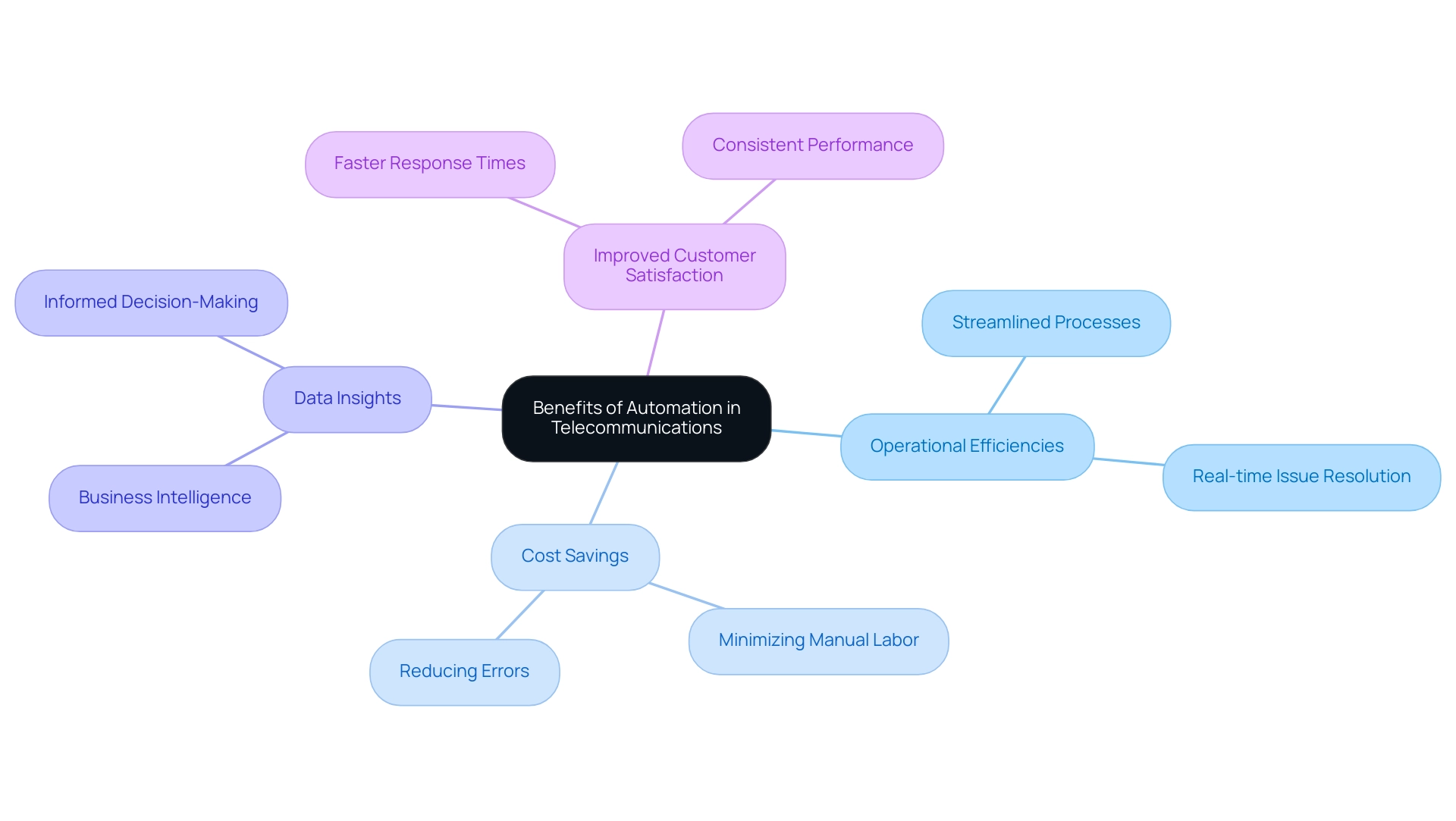
The advantages of mechanization in telecommunications are multifaceted and essential in today’s rapidly evolving AI landscape.
Firstly, it leads to significant operational efficiencies by streamlining processes and reducing the time required for task completion. For instance, automated network monitoring can identify issues in real-time, allowing for quicker resolutions that enhance service quality.
Additionally, leveraging Robotic Process Automation (RPA) can result in substantial cost savings by minimizing the need for manual labor and reducing errors that lead to costly downtime.
Furthermore, the integration of mechanization and tailored AI solutions empowers businesses to unlock powerful insights through Business Intelligence, facilitating informed decision-making that drives growth and innovation.
In a competitive environment, failing to utilize these data-driven insights can leave businesses at a disadvantage.
Ultimately, these enhancements lead to faster response times and consistent performance, resulting in improved customer satisfaction.
Navigating New Complexities in Network Automation
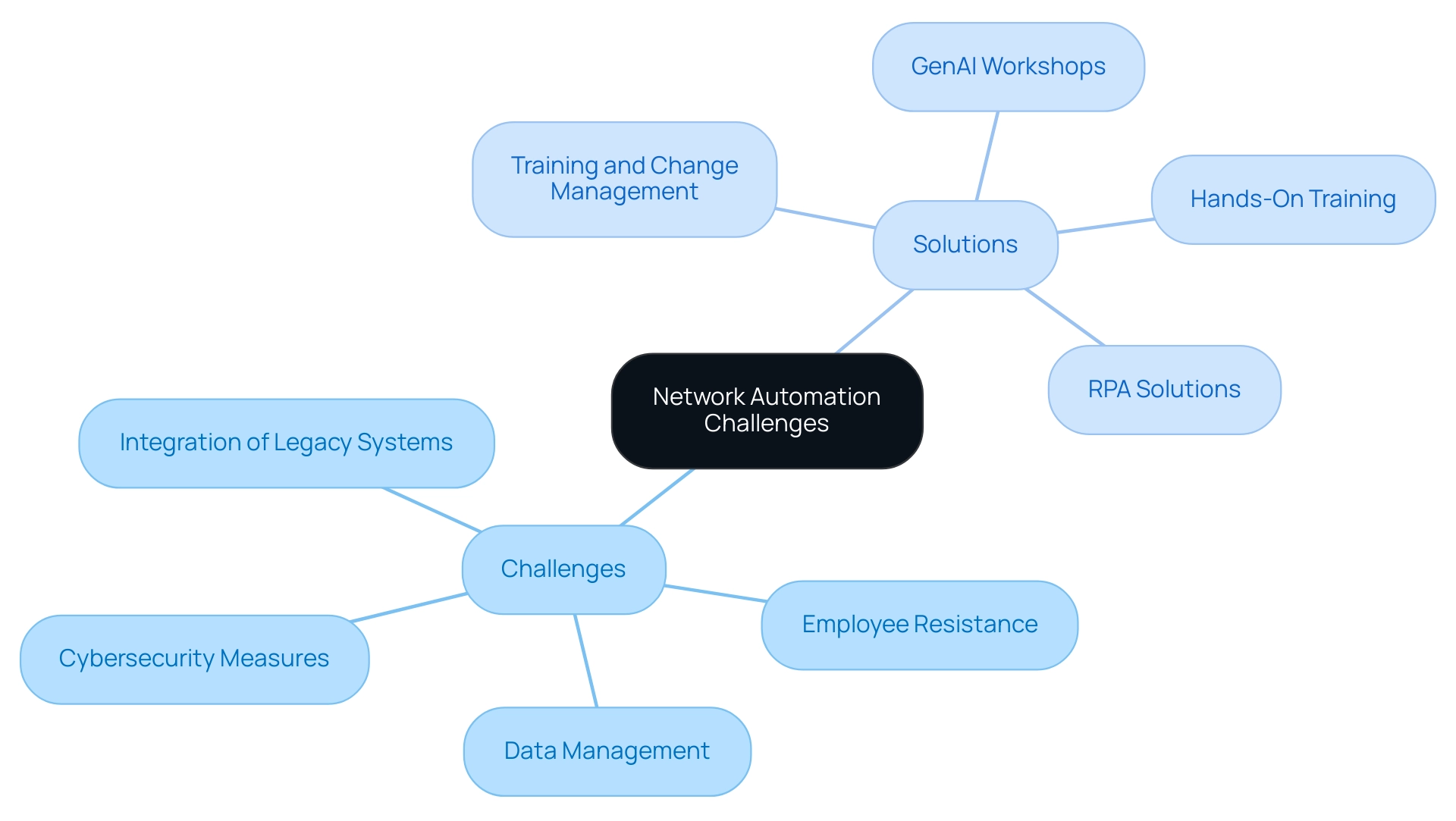
As telecommunications networks develop, organizations encounter new challenges in their operational journeys. Integrating legacy systems with contemporary control tools, ensuring robust cybersecurity measures, and managing the extensive data generated by automated processes are critical challenges. Furthermore, resistance from employees accustomed to traditional methods can hinder progress.
To effectively address these challenges, companies should invest in comprehensive training and change management strategies. Our GenAI workshops focus on personalized customer experiences and ethical AI usage, while our hands-on training equips your team with the practical skills needed to implement and manage AI solutions effectively.
Additionally, our RPA solutions empower businesses by streamlining repetitive tasks and fostering a culture that embraces innovation and technological advancement. With a risk-free ROI-driven strategy, we guarantee a seamless shift to more efficient processes, maximizing productivity and minimizing burdens.
The Role of AI and Intelligent Automation in Telecommunications
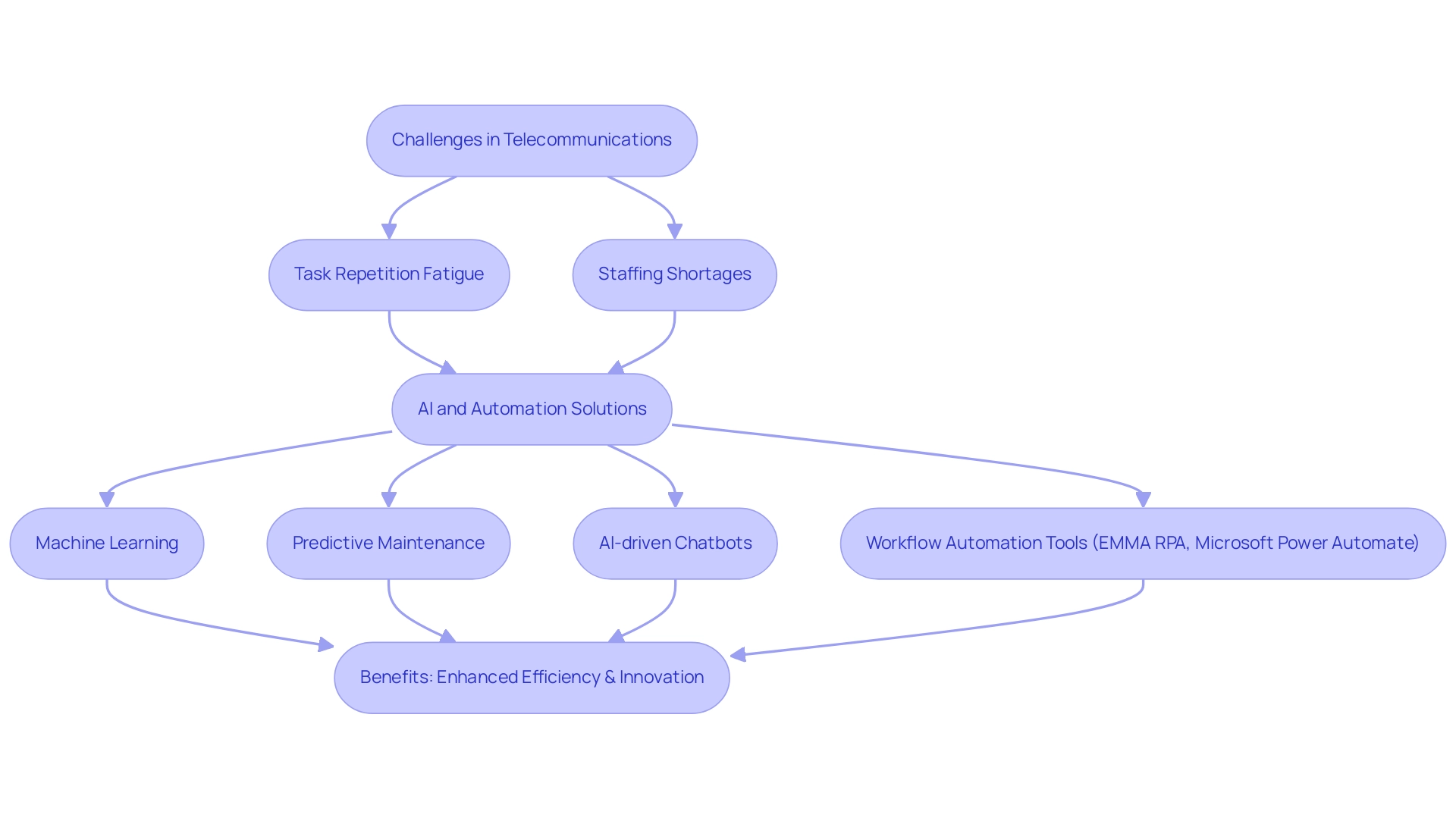
AI and smart technology are essential for transforming communication operations. By leveraging machine learning algorithms and advanced analytics, companies can optimize network performance, predict maintenance requirements, and personalize customer interactions. Tools like EMMA RPA and Microsoft Power Automate streamline manual workflows, addressing challenges such as:
- Task repetition fatigue
- Staffing shortages
This boosts efficiency and reduces errors, ultimately enhancing employee morale. For example, AI-driven chatbots efficiently manage customer inquiries, allowing human agents to focus on complex issues. This integration of AI not only enhances efficiency but also nurtures innovative services that set companies apart in a competitive marketplace, ensuring they remain ahead in a rapidly evolving landscape.
Future Trends and Strategic Impacts of Automation in Telecommunications
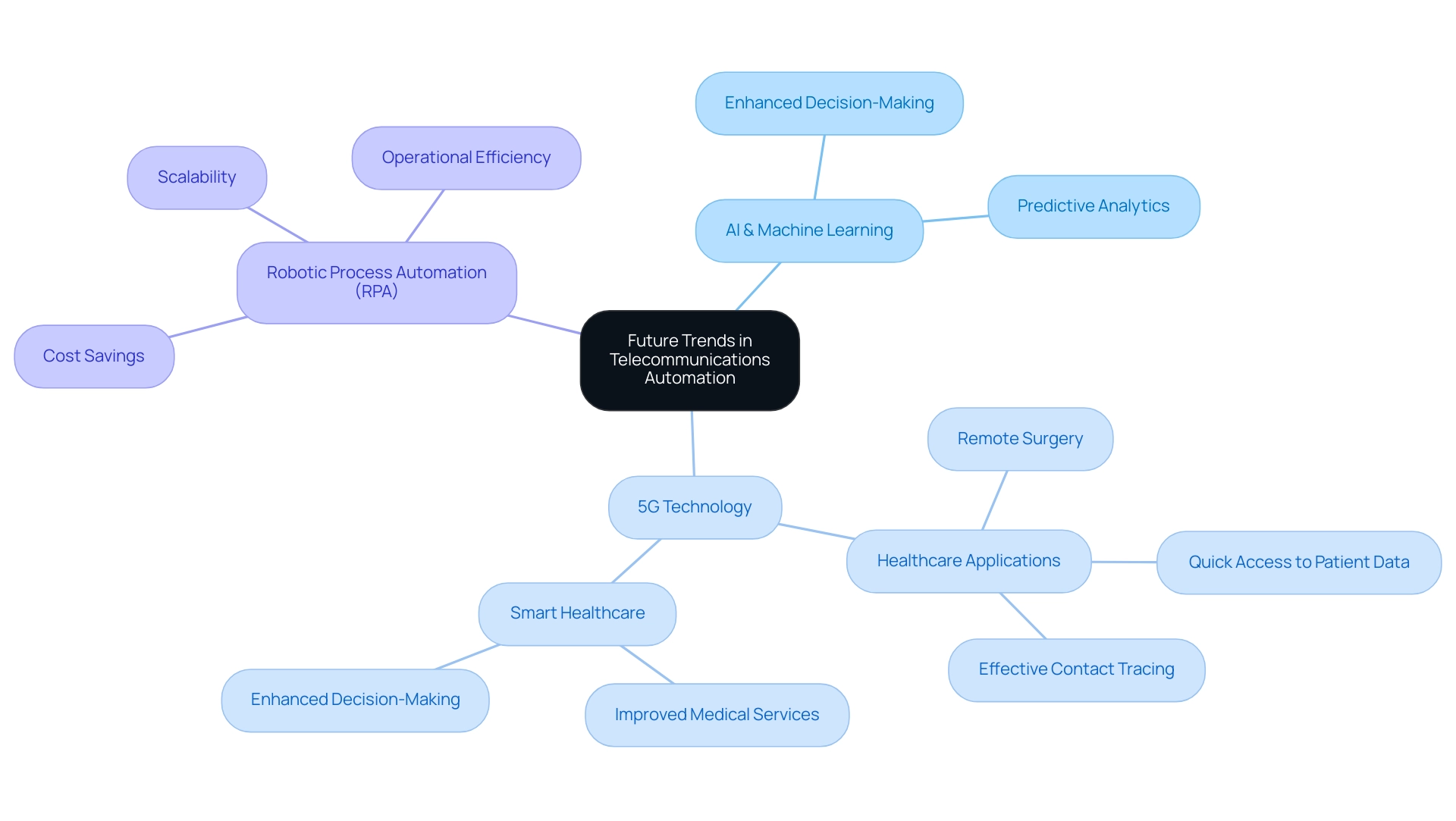
The evolution of mechanization within telecommunications is poised for a significant acceleration, primarily driven by advancements in AI, machine learning, and IoT technologies. As network complexity escalates and service demand intensifies, leveraging Robotic Process Automation (RPA) becomes essential for enhancing scalability and operational efficiency while also delivering substantial cost savings.
A pivotal trend is the advent of 5G technology, which not only facilitates faster information transfer but also necessitates innovative automation solutions to manage the surge in traffic and connectivity effectively. For instance, Hadrian X, the world’s first autonomous bricklaying robot, demonstrates this potential, functioning 95% quicker and up to 90% less expensive by utilizing 5G networks for rapid information processing. As Kashyap Vyas aptly notes, ‘Hadrian X does its job effortlessly, as it can quickly process massive amounts of information transferred over a 5G network.’
Moreover, 5G technology significantly enhances healthcare through applications like remote surgery and quick access to patient data, which are crucial for improving decision-making and potentially saving lives. The shift towards edge computing will also require refined automation strategies to optimize resource allocation and elevate performance.
Additionally, the strategic impacts of tailored AI solutions and Business Intelligence on the sector will shape the industry’s future landscape. Business Intelligence plays a critical role in transforming raw data into actionable insights, enabling informed decisions that drive growth. Companies that proactively adopt these trends will not only enhance their operational capabilities through RPA but will also position themselves as leaders in the telecommunications sector, driving innovation and competitive advantage into 2024 and beyond.
Conclusion
Embracing automation in telecommunications is no longer a choice but a necessity for companies aiming to thrive in a rapidly changing environment. By strategically implementing automation technologies such as Robotic Process Automation (RPA) and AI solutions, organizations can significantly enhance operational efficiency, reduce manual errors, and accelerate service delivery. The case studies highlighted demonstrate how automation can lead to remarkable improvements, including a 70% reduction in data entry errors and a 50% acceleration in software testing processes.
However, the journey toward automation is not without its challenges. Integrating legacy systems, ensuring robust cybersecurity, and managing employee resistance are critical hurdles that need to be addressed. By investing in comprehensive training and change management, companies can foster a culture that embraces innovation and effectively harness the benefits of automation.
Tools like EMMA RPA and Microsoft Power Automate are instrumental in streamlining workflows and enhancing productivity, ultimately leading to improved customer satisfaction.
Looking ahead, the future of telecommunications will be shaped by the continued evolution of automation technologies, especially with the rise of 5G and edge computing. These advancements not only promise enhanced operational capabilities but also the potential for groundbreaking services that can redefine customer experiences and drive growth. By proactively adopting these trends and leveraging intelligent automation, telecommunications companies can position themselves as leaders in the industry, driving innovation and maintaining a competitive edge well into the future.
The time to act is now—embracing automation is the key to unlocking unparalleled efficiency and success in the telecommunications landscape.
Frequently Asked Questions
What is automation in telecommunications?
Automation in telecommunications refers to the strategic use of technology to perform tasks that previously required human intervention, such as network configuration, fault management, and service provisioning.
What challenges did the mid-sized company face before implementing automation?
The company faced significant challenges including manual information entry errors, slow software testing, and difficulty integrating outdated systems without APIs.
How did the company improve its operations through automation?
By utilizing GUI tools for automated data entry and software testing, the company achieved a 70% decrease in data entry mistakes and a 50% increase in testing speed.
What is the projected trend for automation in the telecommunications industry by 2024?
It is projected that over 70% of telecommunications companies will implement some form of mechanization by 2024 to enhance service delivery and respond quickly to market demands.
What role do EMMA RPA and Microsoft Power Automate play in telecommunications?
EMMA RPA automates repetitive tasks such as manual data entry, while Microsoft Power Automate streamlines workflows by connecting various applications and services, thus minimizing human error and enhancing productivity.
What are the benefits of mechanization in telecommunications?
Mechanization leads to operational efficiencies, cost savings, faster response times, improved service quality, and enhanced customer satisfaction by streamlining processes and reducing task completion time.
What challenges do organizations face as telecommunications networks develop?
Organizations encounter challenges such as integrating legacy systems with modern tools, ensuring robust cybersecurity, managing extensive automated data, and overcoming employee resistance to new methods.
How can companies address these challenges?
Companies should invest in comprehensive training and change management strategies, including workshops on personalized customer experiences and hands-on training for implementing AI solutions.
How does AI and smart technology transform communication operations?
AI and smart technology optimize network performance, predict maintenance needs, and personalize customer interactions, while tools like EMMA RPA and Microsoft Power Automate enhance efficiency and reduce errors.
What is the significance of 5G technology in automation?
5G technology facilitates faster information transfer and requires innovative automation solutions to effectively manage increased traffic and connectivity demands, enhancing operational efficiency and service delivery.
How does Business Intelligence contribute to telecommunications?
Business Intelligence transforms raw data into actionable insights, enabling informed decision-making that drives growth and innovation in the telecommunications sector.
List of Sources
- Defining Automation in Telecommunications
- Automation Quotes – BrainyQuote (https://brainyquote.com/topics/automation-quotes)
- 32 of the Best AI and Automation Quotes To Inspire Healthcare Leaders – Blog – Akasa (https://akasa.com/blog/automation-quotes)
- Future Trends and Strategic Impacts of Automation in Telecommunications
- ibm.com (https://ibm.com/think/topics/5g-use-cases)
- itbusinessedge.com (https://itbusinessedge.com/networking/5g-industrial-automation)