

Introduction
In the dynamic landscape of Big Data, organizations are presented with a wealth of opportunities to enhance their operational efficiency through analytics. By understanding the four distinct types—Descriptive, Diagnostic, Predictive, and Prescriptive—businesses can transform raw data into actionable insights that drive strategic decision-making. Each type serves a unique purpose: from summarizing historical trends to predicting future outcomes and recommending specific actions.
As companies navigate the complexities of data, leveraging these analytics effectively can not only address existing challenges but also empower them to innovate and thrive in an increasingly competitive environment. This exploration delves into how organizations can harness the power of analytics to unlock their full potential.
Overview of the Four Types of Analytics in Big Data
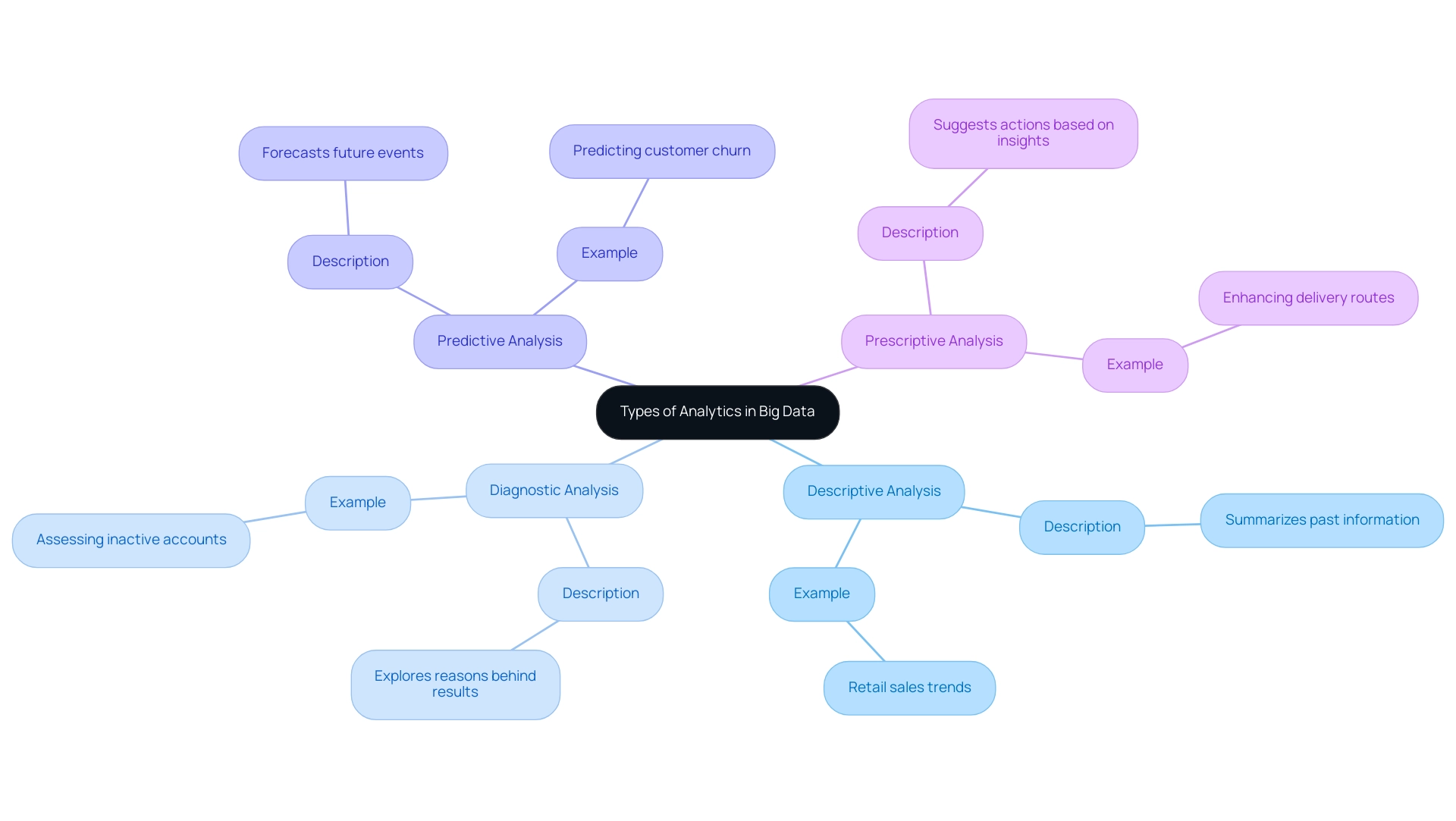
In the realm of Big Data, analysis can be categorized into four distinct types: Descriptive, Diagnostic, Predictive, and Prescriptive. Each type plays a crucial role in assisting organizations to interpret information and make informed decisions, thus enhancing operational efficiency and addressing implementation challenges.
- Descriptive Analysis emphasizes summarizing past information to comprehend what has occurred, which is crucial in navigating the overwhelming AI landscape. For instance, a retail company might use descriptive analytics to examine past sales information to identify trends.
- Diagnostic Examination explores further to reveal the reasons behind previous results, offering valuable insights that guide future strategies; a financial institution may assess customer transaction information to ascertain why certain accounts are inactive.
- Predictive Analysis employs statistical models to forecast future events, enabling businesses to anticipate challenges and customize AI solutions accordingly, such as predicting customer churn.
- Prescriptive Analytics advances by suggesting actions based on insights, enabling decision-makers to foster growth and innovation. For instance, a logistics firm could utilize prescriptive analytics to enhance delivery routes based on real-time traffic information.
Comprehending these categories is essential for any entity aiming to utilize the potential of Big Information effectively, employing BI and RPA to convert information into actionable insights, overcome operational challenges, and tackle the significant issue of insufficient insight-driven analysis.
Understanding Descriptive Analytics: Purpose and Real-Life Examples
Descriptive analysis aims to summarize previous information through visual representations and reports, assisting entities in grasping trends and patterns essential for operational efficiency. For example, a retail company might leverage Descriptive Analytics to analyze sales information from the previous year, identifying peak shopping seasons that inform inventory management and marketing strategies. In the healthcare sector, a hospital could track patient admission rates to pinpoint busy periods, thereby enabling effective resource allocation and staffing.
However, entities often encounter challenges such as:
- Time-consuming report generation
- Inconsistencies
- A lack of actionable guidance from their insights
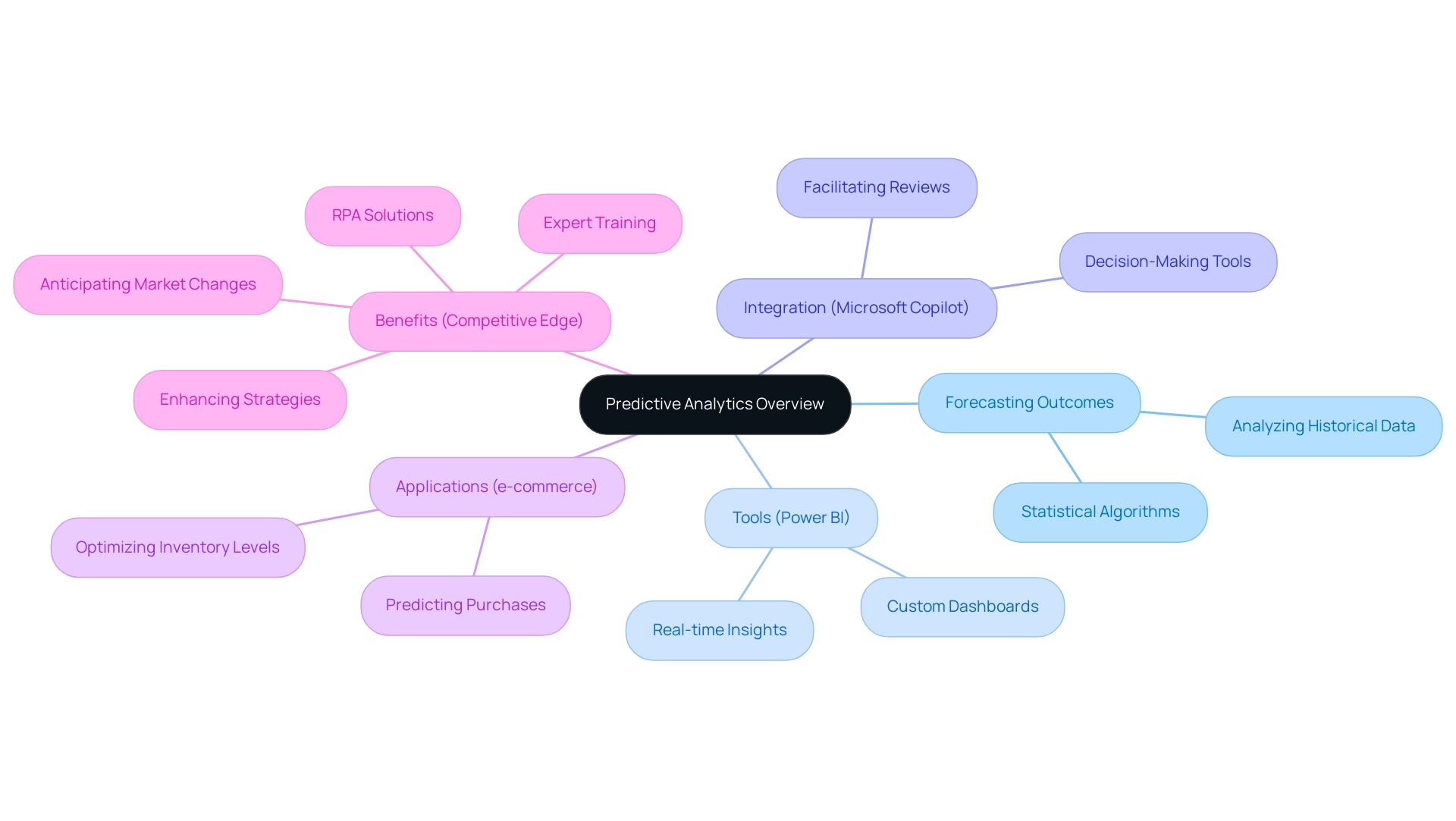
By integrating RPA solutions, entities can simplify the report creation process and ensure information consistency, thereby transforming historical performance into strategic actions. Furthermore, customized AI solutions can improve the use of Descriptive Insights, allowing entities to manage their information challenges more effectively. By effectively harnessing Descriptive Analytics within a robust Business Intelligence framework, companies can drive growth and innovation.
Exploring Diagnostic Analytics: Insights into Past Performance
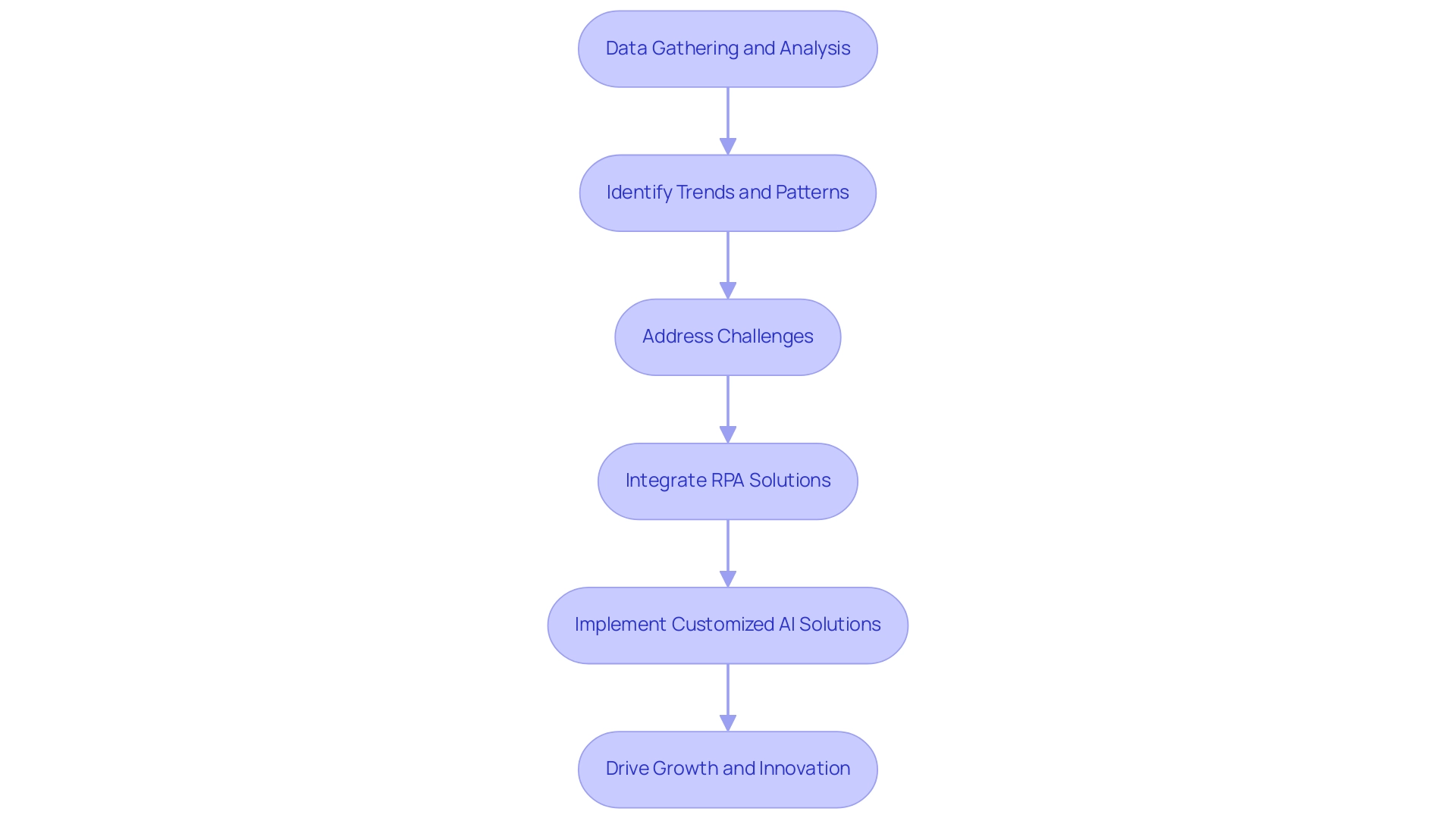
Diagnostic analysis functions as a robust instrument for organizations aiming to explore historical information and reveal the elements behind specific results, especially regarding operational efficiency. A recent case study from a mid-sized company illustrates how GUI automation significantly enhanced their workflow by addressing challenges such as:
- Manual information entry errors
- Slow software testing
- The integration of outdated systems without APIs
By utilizing RPA and diagnostic analysis, this company decreased information entry mistakes by 70%, hastened testing procedures by 50%, and enhanced workflow effectiveness by 80%. The ROI was achieved within 6 months, aligning with findings from the McKinsey Global Institute, which estimates that Big Data could generate up to $3 trillion in value per year.
This case exemplifies how businesses can correlate diverse datasets—like production line metrics and employee shift patterns—to pinpoint root causes of inefficiencies. As Brittany Jaros aptly states, ‘Your Information Won’t Speak Unless You Ask It the Right Questions,’ underscoring the need for a focused approach in analysis.
Furthermore, this method has been successfully applied to evaluate social media campaigns by correlating daily sales with engagement metrics, enabling businesses to assess the impact of their strategies. Ultimately, harnessing diagnostic analytics empowers entities to enhance operational efficiency and drive growth through informed, data-driven decisions, particularly in the healthcare service delivery sector.
Predictive Analytics: Forecasting Future Trends with Data
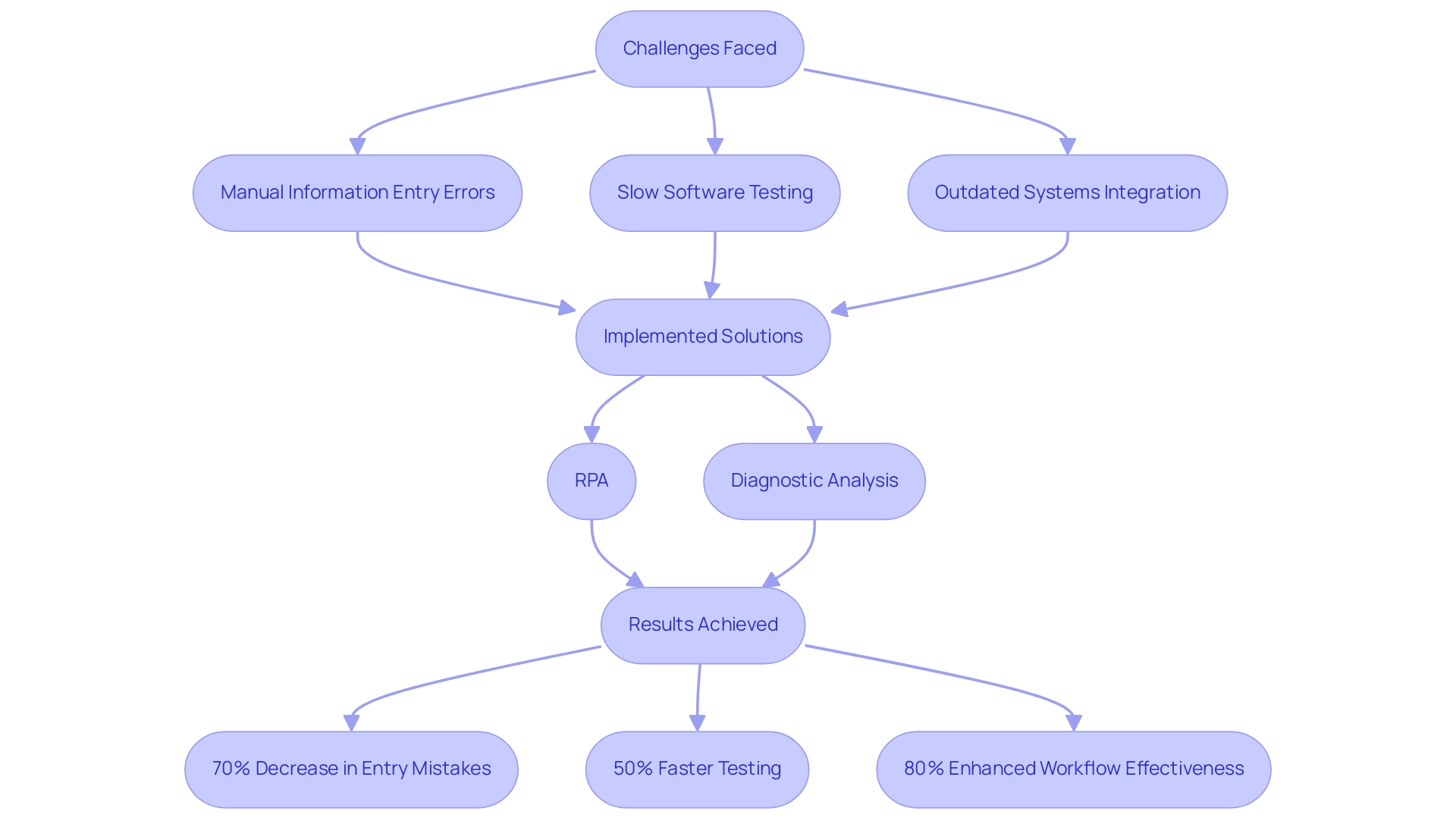
Predictive Analytics utilizes historical information and statistical algorithms to forecast future outcomes. For instance, an e-commerce business may analyze customer buying patterns to predict future purchases during upcoming sales events.
With tools like Power BI, companies can create custom dashboards that provide real-time insights, empowering them to optimize inventory levels and tailor marketing campaigns to target specific customer segments.
Our General Management App integrates with Microsoft Copilot to facilitate insightful reviews, ensuring that decision-makers have the necessary tools at their disposal.
Moreover, our GenAI Workshops and Small Language Models improve the predictive assessment capabilities by offering customized AI solutions for effective information analysis.
Predictive Insights empowers organizations to anticipate changes in the market and adapt their strategies accordingly, enhancing their competitive edge while benefiting from seamless information integration, RPA solutions to automate repetitive tasks, and expert training to maximize analytical capabilities.
Prescriptive Analytics: Guiding Decision-Making through Data Insights
Prescriptive Analysis goes beyond forecasting to suggest specific actions based on information insights. For example, a logistics firm may employ Prescriptive Analytics to identify the most efficient delivery routes, incorporating real-time traffic information and historical delivery durations. By implementing these actionable recommendations, the company can not only reduce transportation costs but also enhance service levels.
This form of analysis, particularly when paired with Creatum’s 3-Day Power BI Sprint, which guarantees a refined, fully operational report that can act as a template for future projects, enables organizations to comprehend not only what is probable to occur but also the strategic measures to adopt in reaction.
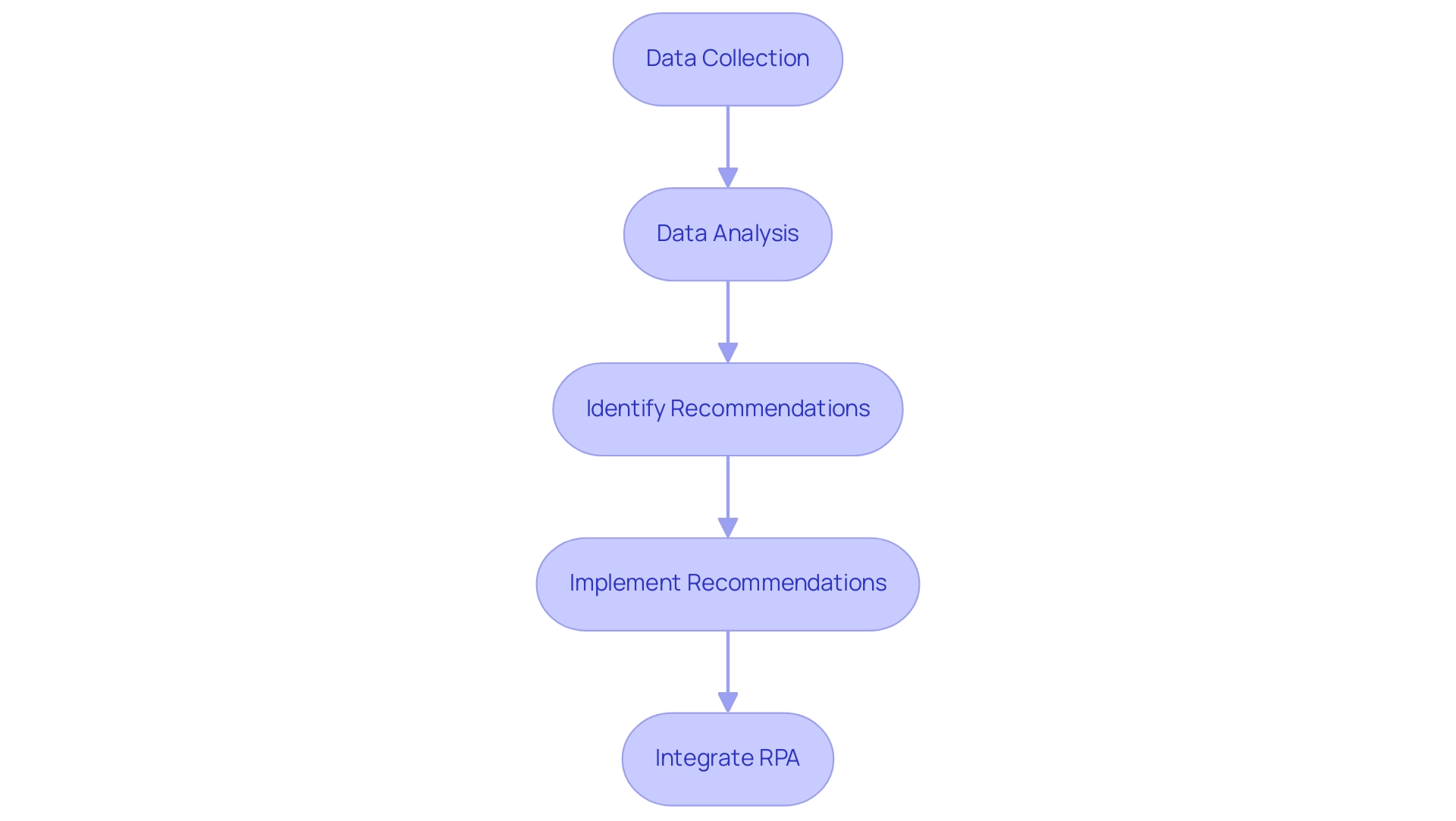
Furthermore, integrating Robotic Process Automation (RPA) can streamline these workflows, reducing manual tasks and enhancing operational efficiency. For example, RPA can automate data entry processes, allowing teams to focus on analyzing insights rather than managing data. This makes analytics an invaluable tool for driving business growth and innovation.
Conclusion
Harnessing the power of analytics in the realm of Big Data is essential for organizations aiming to enhance their operational efficiency and drive strategic decision-making. Each of the four types of analytics—Descriptive, Diagnostic, Predictive, and Prescriptive—serves a distinct purpose that collectively empowers businesses to transform raw data into actionable insights. Descriptive Analytics provides a comprehensive view of historical trends, while Diagnostic Analytics uncovers the reasons behind those trends, enabling organizations to learn from past performance.
Predictive Analytics takes this further by forecasting future outcomes, allowing companies to anticipate market shifts and adapt their strategies proactively. Finally, Prescriptive Analytics offers specific recommendations, guiding decision-makers towards the most effective actions based on data insights. By integrating these analytics into their operations, organizations can not only address existing challenges but also unlock innovative solutions that propel growth and efficiency.
In an increasingly competitive landscape, the ability to leverage analytics effectively is not just an advantage; it is a necessity. Embracing these analytical approaches will enable organizations to navigate complexities, make informed decisions, and thrive in their respective industries. The journey toward data-driven excellence begins with understanding and implementing these powerful tools, ultimately leading to a more resilient and successful future.
Frequently Asked Questions
What are the four types of Big Data analysis?
The four types of Big Data analysis are Descriptive, Diagnostic, Predictive, and Prescriptive analysis. Each type helps organizations interpret information and make informed decisions to enhance operational efficiency.
What is Descriptive Analysis?
Descriptive Analysis focuses on summarizing past information to understand what has occurred. For example, a retail company may analyze past sales data to identify trends and inform inventory management.
What challenges do organizations face with Descriptive Analysis?
Organizations often encounter challenges such as time-consuming report generation, inconsistencies in data, and a lack of actionable insights. Integrating RPA solutions can help simplify report creation and ensure data consistency.
How does Diagnostic Analysis differ from Descriptive Analysis?
Diagnostic Analysis goes further than Descriptive Analysis by exploring the reasons behind past results. It provides valuable insights that guide future strategies, such as assessing customer transaction information to understand account inactivity.
Can you provide an example of Diagnostic Analysis in action?
A mid-sized company used Diagnostic Analysis combined with RPA to reduce information entry errors by 70% and enhance workflow effectiveness by 80%, achieving a return on investment within six months.
What is Predictive Analysis?
Predictive Analysis uses historical data and statistical models to forecast future outcomes. For instance, an e-commerce business might analyze customer buying patterns to predict purchases during sales events.
How can organizations benefit from Predictive Analysis?
Organizations can anticipate market changes and adapt strategies accordingly, optimizing inventory levels and tailoring marketing campaigns. Tools like Power BI can help create custom dashboards for real-time insights.
What is the purpose of Prescriptive Analysis?
Prescriptive Analysis goes beyond forecasting by suggesting specific actions based on insights. For example, a logistics firm may use it to determine the most efficient delivery routes, incorporating real-time traffic data.
How can RPA enhance Prescriptive Analysis?
RPA can streamline workflows by automating manual tasks, such as data entry, allowing teams to focus on analyzing insights and implementing strategic recommendations, which drives business growth and innovation.
List of Sources
- Exploring Diagnostic Analytics: Insights into Past Performance
- nobledesktop.com (https://nobledesktop.com/classes-near-me/blog/diagnostic-analytics)
- quizlet.com (https://quizlet.com/543657576/ais-midterm-2-flash-cards)